累 as a Result Complement — Tired from Doing
Overview
累 (lèi) is a result complement meaning the subject has become tired as a result of doing something. 走累 is "tired from walking," 跑累 is "tired from running," 看累 is "tired from reading or watching." Like 饱, 累 belongs to the small group of complements that describe a state of the subject rather than the object — when you say 我走累了, the tiredness is yours, not the walking's. The verb tells you exactly what wore you out.
累 (lèi) says the doer became tired from the action: 走累, 跑累, 看累. It describes the subject's state.
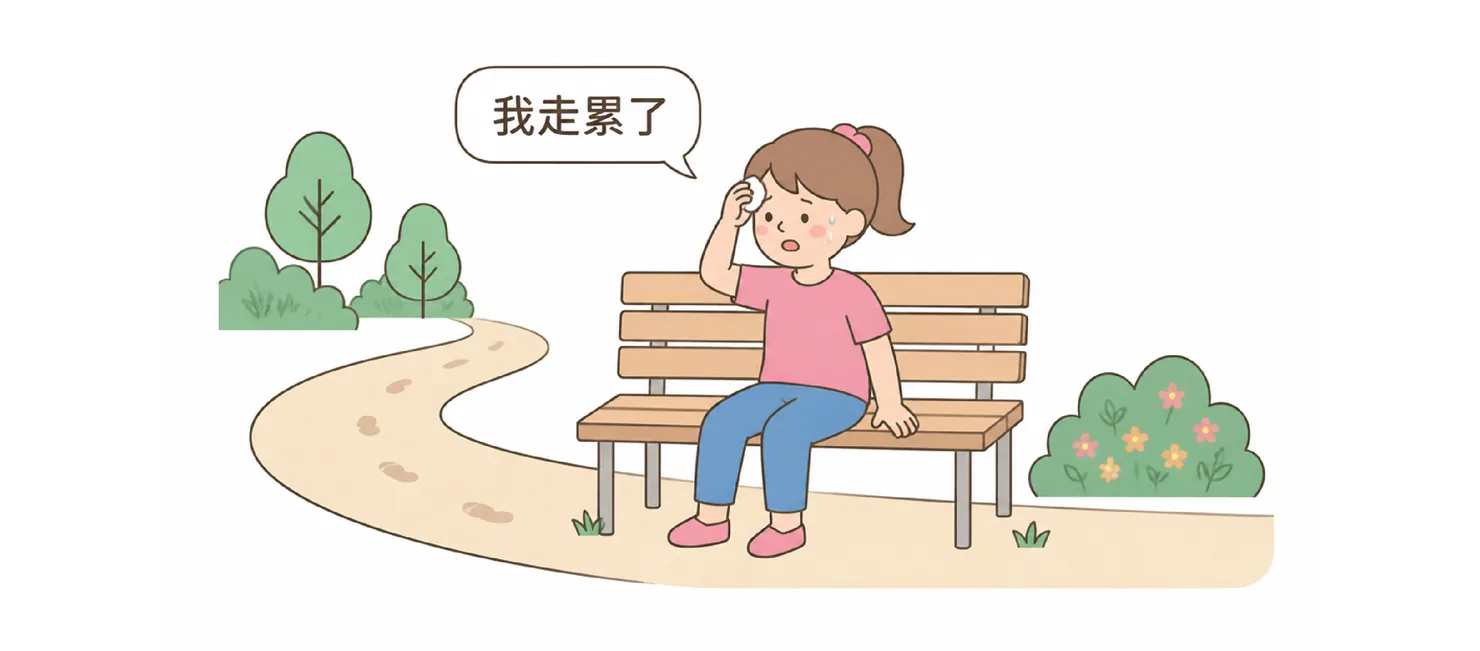 我走累了 — “I’m tired from walking.” The 走 names the cause of the tiredness.
Key rule: 累 attaches directly to the verb, and the verb identifies the cause of the fatigue.
What 累 Adds to the Verb
| Without 累 | Pinyin | With 累 | Pinyin | Difference |
|---|---|---|---|---|
| 我走了。 | Wǒ zǒu le. | 我走累了。 | Wǒ zǒu lèi le. | walked vs. got tired from walking |
| 他跑了。 | Tā pǎo le. | 他跑累了。 | Tā pǎo lèi le. | ran vs. got tired from running |
Physical and Mental Tiredness
累 covers both kinds of fatigue. Physical exertion (walking, running, standing) is the obvious case, but sustained mental attention — reading, watching, studying — works the same way.
累 covers both physical exertion and sustained mental effort.
| Type | What it means | Example |
|---|---|---|
| Physical tiredness | worn out by bodily exertion | 跑累 pǎo lèi — tired from running; 走累 zǒu lèi — tired from walking; 站累 zhàn lèi — tired from standing |
| Mental tiredness | worn out by sustained attention | 看累 kàn lèi — tired from reading/watching; 读累 dú lèi — tired from reading |
Which Verbs Pair with 累
| Verb + 累 | Pinyin | English |
|---|---|---|
| 走累 | zǒu lèi | become tired from walking |
| 跑累 | pǎo lèi | become tired from running |
| 看累 | kàn lèi | become tired from watching / reading |
| 站累 | zhàn lèi | become tired from standing |
| 读累 | dú lèi | become tired from reading |
Compatibility: 累 needs an activity that can wear someone out over time. Instantaneous or stative verbs are blocked — ❌ 知道累 (zhīdào lèi), ❌ 喜欢累 (xǐhuān lèi).
Core Examples
| Chinese | Pinyin | English | Context |
|---|---|---|---|
| 我走累了。 | Wǒ zǒu lèi le. | I’m tired from walking. | after a long walk |
| 他跑累了。 | Tā pǎo lèi le. | He’s tired from running. | after exercise |
| 我看累了,想休息一下。 | Wǒ kàn lèi le, xiǎng xiūxi yīxià. | I’m tired from watching — I want to rest a bit. | after long viewing |
| 站了一天,我站累了。 | Zhàn le yī tiān, wǒ zhàn lèi le. | I stood all day and got tired from standing. | after a long shift |
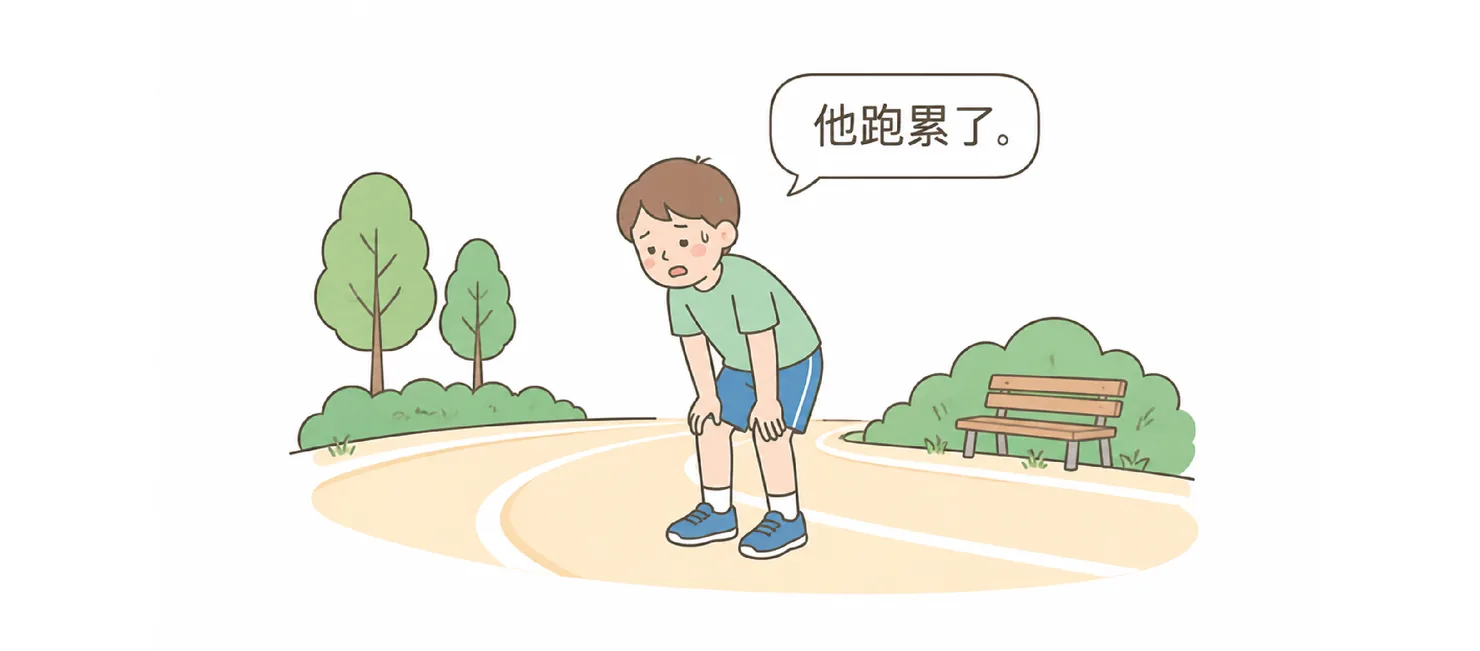 他跑累了 — “He’s tired from running.”
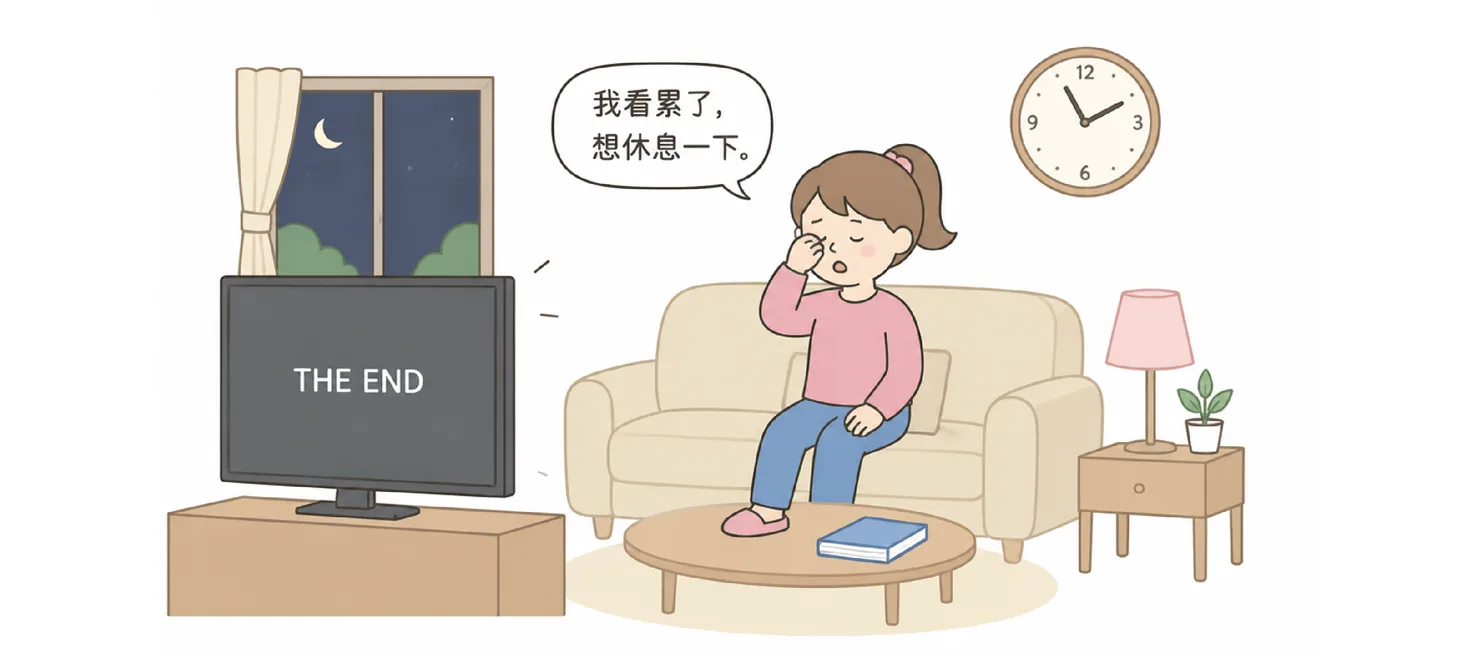 我看累了,想休息一下 — “I’m tired from watching; I want to rest a bit.”
Nuance 1 — 累 Describes the Doer, Not the Object
Most result complements tell you what happened to the object: 看完书 means the book got finished. 累 is different — it reports the state of the person doing the action. This is the same pattern as 饱, and the two are worth learning together as the "subject-state" pair.
累 reports the doer's state, like 饱 — not what happened to the object.
| Chinese | Pinyin | English | Whose state? |
|---|---|---|---|
| 我看累了。 | Wǒ kàn lèi le. | I got tired from reading. | the person |
| 我看完了。 | Wǒ kàn wán le. | I finished reading it. | the book |
Nuance 2 — 累 as Complement vs. 累 as Adjective
累 is also an ordinary adjective meaning "tired." The difference is whether a cause is named: as a complement it follows a verb and tells you what made you tired; as an adjective it simply states the condition.
V+累 names the cause of tiredness; plain 累 just states you're tired.
| 累 as… | Chinese | Pinyin | English |
|---|---|---|---|
| result complement | 我走累了。 | Wǒ zǒu lèi le. | I’m tired from walking. |
| adjective | 我很累。 | Wǒ hěn lèi. | I’m very tired. (no cause given) |
Nuance 3 — Nothing Comes Between the Verb and 累
| Chinese | Pinyin | English | |
|---|---|---|---|
| ✅ Correct | 我走累了。 | Wǒ zǒu lèi le. | I got tired from walking. |
| ❌ Incorrect | 我走了累。 | Wǒ zǒu le lèi. | 了 cannot separate 走 and 累. |
Negation — Use 没, Not 不
| Chinese | Pinyin | English | |
|---|---|---|---|
| ✅ Correct | 我没走累。 | Wǒ méi zǒu lèi. | I didn’t get tired from walking. |
| ❌ Incorrect | 我不走累。 | Wǒ bù zǒu lèi. | 没 is for completed actions, not 不. |
Quick Reference
| Point | Summary |
|---|---|
| Meaning | 累 = became tired as a result of the action |
| Whose state | the subject (the doer), not the object |
| Covers | physical exertion and sustained mental effort |
| Negation | 没 for completed actions; not 不 |
| 累 vs 完 | 累 = the person is worn out · 完 = the task is finished |
| Common verbs | 走, 跑, 看, 站, 读 |
Drills
Fill in the correct result complement. Choose from 累 / 饱 / 完 / 到. Each question’s English meaning is the hint.
- 我走___了。(I’m tired from walking.)
- 他跑___了。(He’s tired from running.)
- 我看___了,想休息一下。(I’m tired from watching.)
- 站了一天,我站___了。(I got tired from standing all day.)
- 读___了就休息吧。(Rest when you get tired from reading.)
- 走了一天,孩子们都走___了。(The children all got tired from walking.)
- 我吃___了,不用再给我了。(I’m full.)
- 他没吃___。(He isn’t full.)
- 我吃___饭了,我们走吧。(I finished eating.)
- 作业做___了吗?(Have you finished your homework?)
- 你找___钥匙了吗?(Did you find the keys?)
- 我买___票了!(I managed to get tickets!)
Answer Key: 1. 累 2. 累 3. 累 4. 累 5. 累 6. 累 7. 饱 8. 饱 9. 完 10. 完 11. 到 12. 到
Notes
- Common V+累 chunks: 走累, 跑累, 看累, 站累, 读累.
- 累 and 饱 are the two everyday complements describing the subject’s own state.
- Don’t confuse V+累 (tired from something) with the intensifier 累死了 (lèi sǐle, “exhausted”), which is a degree complement — see degree adverbs.
- For the whole family see result complements.
Sources
HSK Standard Course 3 — 结果补语 (累) HSK Standard Course 2 — L9 (结果补语, result complements introduced) HSK Standard Course 3 — L6 (V得/不 + RC, potential form)